
Christmas in Iran 2025: Celebrations, Traditions, and the Growing Festive Spirit
Unveiling the Festive Blend of Faith and Culture in the Heart of Persia
Christmas vibe in Tehran 🎄🎅 pic.twitter.com/8hpD2sHVEF
— Living in Tehran (LiT) (@LivinginTehran) December 24, 2025
Background on Iran’s Christian CommunityChristianity has a rich history in Iran, dating back over 2,000 years to the early days of the faith. It arrived during the Parthian and Sassanian empires, with Iranian Christians playing key roles in spreading the gospel across Asia.
Today, Iran’s Christian population is estimated at 300,000 to 800,000, making up about 0.3% to 1% of the total population of over 90 million.
According to the Statistical Center of Iran (SCI), over 130,000 Christians reside in Iran, most of whom are Armenians who are followers of the Oriental Orthodox branch of Christianity. Assyrians, Catholics, Protestants, and Evangelical Christians make up the remainder of Iran’s Christian population. The community includes various denominations: the Armenian Apostolic Church (the largest), Assyrians, Chaldeans, Catholics, Protestants, and a rapidly growing evangelical segment.
Despite being a minority in a Shi’a Islamic Republic (where Shi’a Muslims form 90-95% of the population), Christians are recognized under the constitution and can practice their faith, though with some restrictions.
There are over 650 churches across the country, and the community has faced challenges, including persecution of converts from Islam.
When Is Christmas Celebrated in Iran?
Christmas in Iran aligns with global Christian calendars but varies by denomination. Most Christians, including Assyrians, Chaldeans, Catholics, and Protestants, celebrate on December 25, following the Gregorian calendar. However, the Armenian Orthodox Church, which forms the majority of Iran’s Christians, observes Christmas on January 6, combined with Epiphany (the commemoration of Jesus’ baptism).
Some Iranian Christians celebrate Christmas on Dec. 25 and New Years’ on Jan. 1, while Armenians celebrate Christmas at the same time as the Epiphany on Jan. 6.It’s not a public holiday, so celebrations are private or community-based, often extending from mid-December to early January.
The holiday season overlaps with Yalda Night (December 20-21), the Persian winter solstice festival, creating an extended period of winter cheer.
Cities with the Largest Christian Communities
Iran’s Christian population is concentrated in urban areas with historical ties to Armenian and Assyrian migrations. Tehran hosts the largest community overall, with neighborhoods like Majidieh serving as hubs for Armenian Christians.
Isfahan follows, particularly the New Julfa (Jolfa) district, home to over 8,000 Armenians and iconic churches like Vank Cathedral.
Other notable cities include:
- Urmia: Strong Assyrian presence, with 30,000-50,000 Christians in the northwest.
- Hamadan and Abadan: Smaller but vibrant communities.
- Mashhad: Emerging Christian pockets in this northeastern city, with a population of 3.6 million.
- Shiraz and Tabriz: Historical Christian sites and minorities.
These areas light up with decorations, church events, and markets during the season.
How Christmas Is Celebrated in Iran
Christmas celebrations in Iran emphasize faith, family, and community. Many observe a 25-day fast from December 1, abstaining from meat, eggs, milk, and cheese—known as the “Little Feast.” The fast breaks on Christmas Eve with church services, prayers, and feasts featuring traditional foods like rice, fish, vegetables, and sweets.
Families decorate homes with Christmas trees, lights, and nativity scenes. Gift-giving, carol singing, and storytelling are common. Churches hold midnight masses, with hymns and sermons.
In recent years, modern elements like Santa figures and fireworks have appeared, especially in urban areas. As Christians around the world celebrate Christmas, the holiday season is also observed in Iran, where Christians make up less than 0.2% of the country’s population.
Christmas Celebrations in Major Cities
Tehran
Tehran’s Christmas scene is lively and unexpected, with streets transforming into festive zones. In neighborhoods like Majidieh and Mirza Shirazi Street, shops brim with decorations, trees, and gifts.
Churches such as Saint Sarkis Cathedral host services, and night markets buzz with lights and music. Non-Christians join in, making it a city-wide vibe.
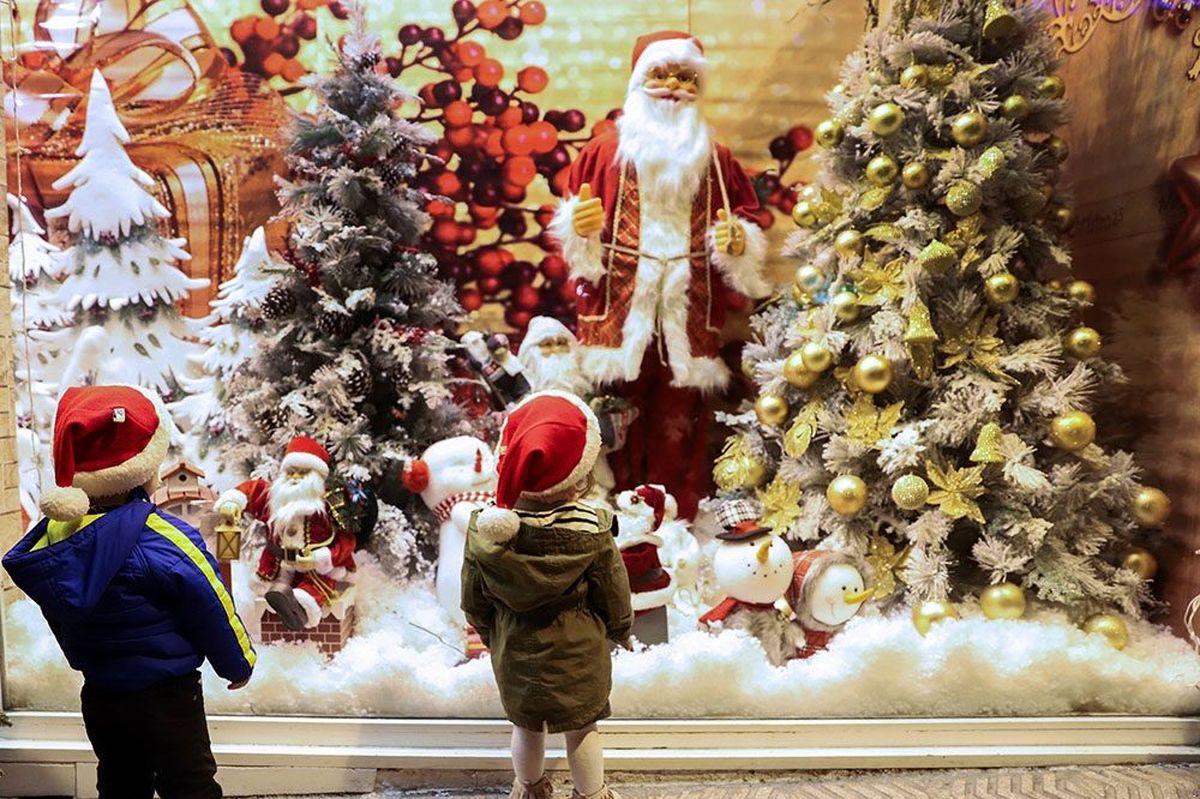
Christmas trees decorated with red, green, and gold gift boxes placed behind shop windows or at the entrances of shopping malls and hotels can be seen, especially in the Christian neighborhoods of Tehran.
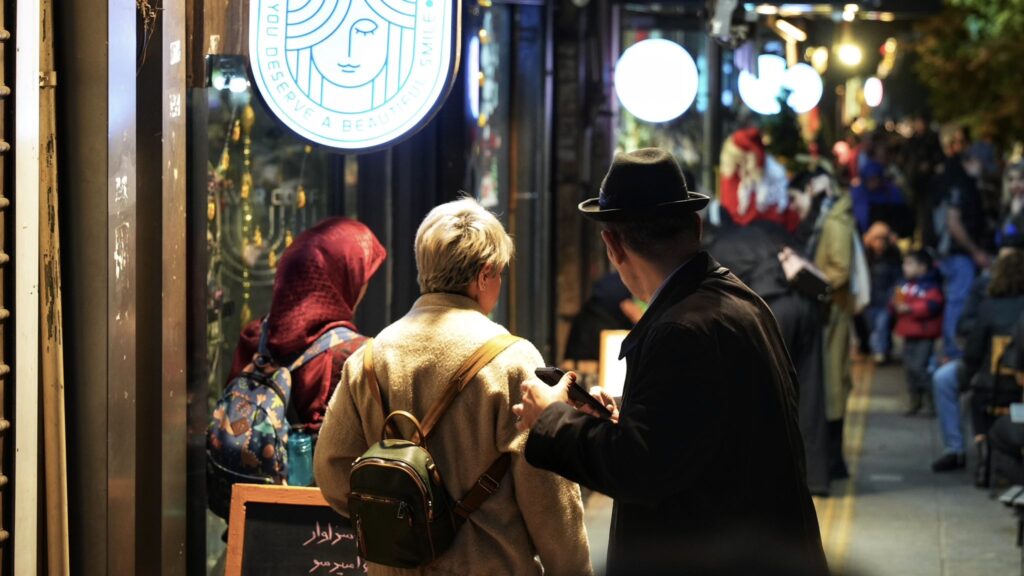
Decorated trees, along with Nativity scenes of the Virgin Mary, Joseph, and baby Jesus, can also be seen in shops along Mirza Shirazi Avenue and Ostaad Nejatollahi (Villa Avenue) and its surrounding neighborhoods in central Tehran, where many Iranian Christians reside.
Isfahan
In Isfahan’s New Julfa, Armenian traditions shine. Vank Cathedral is a focal point for January 6 celebrations, with services, processions, and community feasts.
The neighborhood features decorated streets, family gatherings, and cultural performances. Other cities like Urmia host Assyrian-focused events with traditional dances and meals.
Places to Shop for Christmas in Iran
Shopping adds sparkle to Iran’s Christmas. In Tehran, Mirza Shirazi Street is the epicenter for trees, ornaments, and Santa items. Valiasr Street and malls like the Tehran Grand Bazaar display festive goods.
Bakeries offer Christmas cakes, and hotels/malls in Isfahan and Mashhad join in. The festive mood, however, is not just limited to the Christian neighborhoods of Tehran, as some shops, especially those in the northern and central parts of the city, dedicate at least some section of their shop windows to decorations such as candy canes, snow globes, and Santa Claus figures.
The Growing Popularity of Christmas Among Non-Christian Iranians
Over the past two decades, Christmas has transcended religious boundaries in Iran, becoming a secular celebration of joy and unity.
Young Muslims and non-believers embrace decorations, parties, and shopping, often as a fun extension of Yalda.
This trend reflects global influences, social media, and subtle defiance against the regime. Even clerics’ disapproval hasn’t curbed the enthusiasm—Muslim youth are sometimes “more excited” than Christians.
Christmas vibes in Tehran’s Mirza Shirazi neighborhood! 🎄🎅 pic.twitter.com/lJU5qXOtGG
— Living in Tehran (LiT) (@LivinginTehran) December 26, 2025
Over the past decade, celebrating Christmas has become increasingly popular among young Iranians, regardless of their religion. Of course, the trend has a partly religious basis, as Muslims acknowledge the birth of Jesus Christ and recognize him as one of God’s holy messengers. But another reason for taking part in Christmas celebrations seems to be rooted in the Iranian youth’s desire to “keep up with the rest of the world.”
How to Experience Christmas in Iran
If visiting, head to Tehran or Isfahan for the best vibes—respect local customs, attend public events if invited, and enjoy the fusion of cultures. Christmas in Iran symbolizes resilience and shared humanity in a diverse world.
For more on Iranian festivals, explore our Yalda Night guide. Share your thoughts in the comments!