
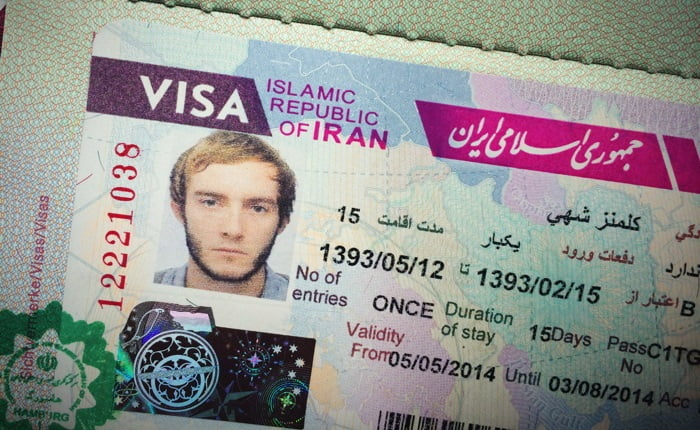
Updated November 2026 We have updated this guide with the current e-visa rules, including who cannot use the e-visa, the rules for dual nationals and recent changes to visa-free entry.
To apply for an Iran e-visa, you fill in an online application on the Ministry of Foreign Affairs’ e-visa portal, upload a photo and a copy of your passport, and wait for an authorisation that lets you collect your visa at an Iranian embassy or on arrival at an international airport. Most nationalities can use the system, the main exceptions being citizens of the US, UK and Canada, who must go through an authorised tour agency. Here is how the process works, step by step.
Do you need a visa at all?
Some nationalities can visit Iran without a visa. Long-standing exemptions cover citizens of countries including Turkey, Georgia, Armenia, Azerbaijan, Egypt, Syria and China, with permitted stays that vary by country. In 2024 Iran also introduced a visa waiver for tourists from a further group of countries, among them Japan, Saudi Arabia, the UAE, Qatar, Indonesia, Brazil and Mexico, allowing stays of up to 15 days. These lists change: India’s visa-free entry was suspended in November 2025 and Lebanon’s exemption was cancelled in May 2026, according to Wikipedia’s summary of Iran’s visa policy. Always check the current rules for your passport before you book. Our Iran visa tips and facts has more background.
Who cannot use the e-visa
- US, UK and Canadian citizens are not eligible for the e-visa or a visa on arrival. They must book a guided tour through an authorised Iranian agency, which applies on their behalf, and must be accompanied by an approved guide during their stay. Approval can take around eight weeks.
- Citizens of several other countries, including Afghanistan, Bangladesh, Colombia, Jordan, Pakistan and Somalia, also cannot use the e-visa and must apply at an Iranian embassy or consulate.
- Dual nationals who hold Iranian citizenship are treated as Iranians and must enter Iran on an Iranian passport, so they cannot apply for a visa on a foreign passport.
What you need before you start
- A passport valid for at least six months beyond your planned stay.
- A recent digital passport-style photo that meets the portal’s published image standards.
- A clear scan of your passport’s photo page, also meeting the published standards.
- A working email address you can check during the application.
- Details of any previous Iranian visas.
- Your travel plans, such as flight details and hotel bookings, if you have them.
- For some visa types, a CV or résumé covering your education and work history.
How to apply step by step
- Open the portal at evisa.mfa.ir and choose the visa type that matches your trip, such as tourist or business.
- Complete every field. Use English and the plain Latin alphabet only, without accents or special characters. Incomplete forms may be rejected.
- Choose where you will collect the visa, either an Iranian embassy or consulate abroad or an international airport on arrival.
- Upload your photo and passport scan, checking that both meet the size and quality requirements.
- Review your answers carefully before you submit.
- Verify your email address by entering the code sent to you. If you do not complete this step within three days, the application expires and you must start again.
- Save your tracking code. Print or save the confirmation page, which shows the code you need to check your application’s progress.
- Wait for the outcome. You will be notified by email. Some applicants are asked to attend an interview at an embassy.
If your application is approved, you receive an authorisation code. Take it, with your passport, to the embassy or airport you selected to have the visa issued. Tourist visas issued this way are generally for stays of up to 30 days, and can usually be extended inside Iran.
Common mistakes to avoid
- Selecting the wrong visa type for the purpose of your trip.
- Entering a nationality that does not match the passport you will travel on. A visa issued for a different nationality is not valid.
- Giving an incomplete or inconsistent home address.
- Uploading photos or scans that are blurred, cropped or the wrong size.
- Choosing the wrong embassy or airport for collection.
Before you travel
Iran no longer stamps passports or affixes visas for most nationalities, although US, UK and Canadian visitors still receive visa stickers and stamps. Foreign bank cards do not work in Iran, so plan to bring cash; our guide on how to exchange foreign currency in Tehran explains how to change it. Many governments currently advise against travel to Iran, so check your own government’s travel advice and your insurance cover before you go.
Planning a trip to Tehran?
- Getting there: see which routes are running in our flights guide, and compare fares to Istanbul on Aviasales. You can also go overland via Armenia or Turkey.
- Getting online: a travel eSIM such as Airalo works from the moment you land.
- Budget beds: browse Tehran hostels on Hostelworld, or read our hotels guide.
- Costs and cover: work out a daily budget with the trip cost calculator, and check our insurance guide.
This box contains affiliate links. Read our disclosure.
A note on our affiliate links: LiT’s affiliate earnings are not earned from inside Iran. Our partners are international companies based outside the country, and no commission is paid to us by any business in Iran.