Updated November 2026 Tabiat Bridge remains open and is still one of Tehran’s most popular evening spots; we have checked the access details and added the bridge’s Aga Khan Award.
Tabiat Bridge (Pol-e Tabiat, “Nature Bridge”) is Tehran’s largest pedestrian bridge and one of the best free places in the city to spend an evening. The 270-metre, three-level steel and timber structure crosses the Modares Expressway in the Abbasabad hills of north-central Tehran, joining Taleghani Park on one side with Ab-o-Atash Park on the other. People come to walk, eat, take photos and watch the city lights come on.

A bridge designed for lingering
Most footbridges exist to get you across a road as quickly as possible. Tabiat was designed to do the opposite. Architect Leila Araghian of Diba Tensile Architecture was 26 when her design won the competition, and the bridge opened at the end of 2014. Its decks wind in a gentle S-shape and split across three levels linked by ramps and stairs, supported by branching, tree-like steel columns. The result feels more like an elevated park than a crossing.
The design has been widely recognised. It won the Aga Khan Award for Architecture in 2016 and a Popular Choice prize at the Architizer A+ Awards, and it featured in The Guardian soon after opening.

What to do on the bridge
- Walk the levels. The lowest level is enclosed and holds the food outlets; the middle level is open with benches; the top deck gives the widest views over Tehran and, on clear days, the Alborz mountains to the north.
- Eat or have a coffee. There are cafés, fast food and Iranian restaurants on the bridge, and more food stalls in Ab-o-Atash Park.
- Take photographs. Sunset and the hour after are the best times, when the sky is still light and the bridge lighting is on. Early morning is quieter if you want shots without crowds.
- Come back at night. The bridge is lit after dark and stays lively well into the evening, especially in spring and summer.

The parks on either side
Taleghani Park is one of Tehran’s bigger green spaces, with wooded slopes, long walking paths and plenty of spots for a picnic. It is popular with families and regularly hosts exhibitions and events.
Ab-o-Atash Park (“Water and Fire Park”) is more modern and built up. Its fountains are a favourite with children in summer, and there is space for skating, exercise and sitting out in the evening. Together with the bridge, the two parks make one continuous green area that is easy to explore on foot for a couple of hours. For more ideas in the same vein, see our guide to Tehran’s free attractions.

Getting there
The nearest metro station is Shahid Haghani on Line 1. From the station, head towards Taleghani Park and follow the paths up to the bridge. The walk is mostly uphill, so give yourself a little extra time. A taxi or a ride-hailing car from apps such as Snapp or Tapsi will drop you at either park entrance.
Visiting Tabiat Bridge: at a glance
- Opening hours: Saturday to Friday: 06:00 to 00:30
- Time needed: 30 to 45 minutes
- Address in Persian (show this to your driver): تهران، میدان ونک، بزرگراه حقانی، بعد از چهار راه جهان کودک، پارک آب و آتش
- Open Tabiat Bridge in Google Maps
Hours can change on public holidays and during Ramadan, so check before you set out.
Tabiat Bridge in pictures
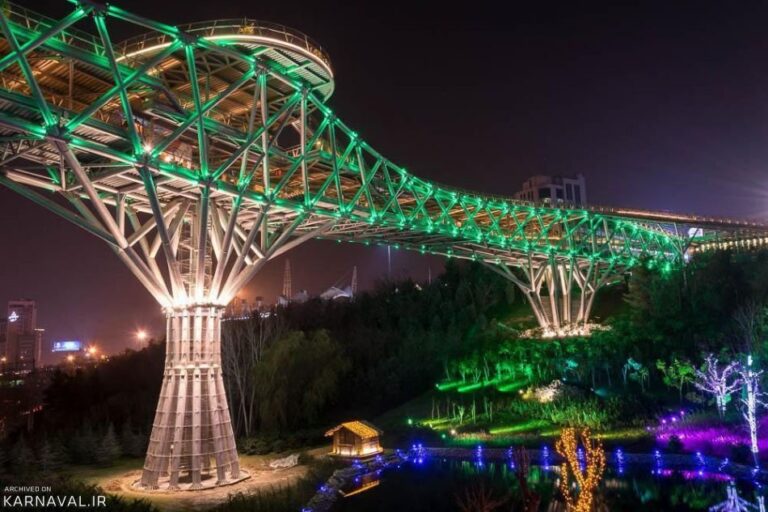
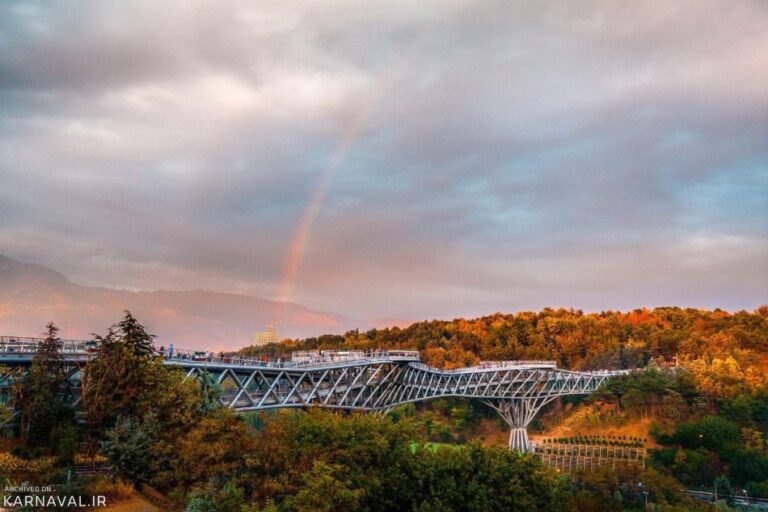
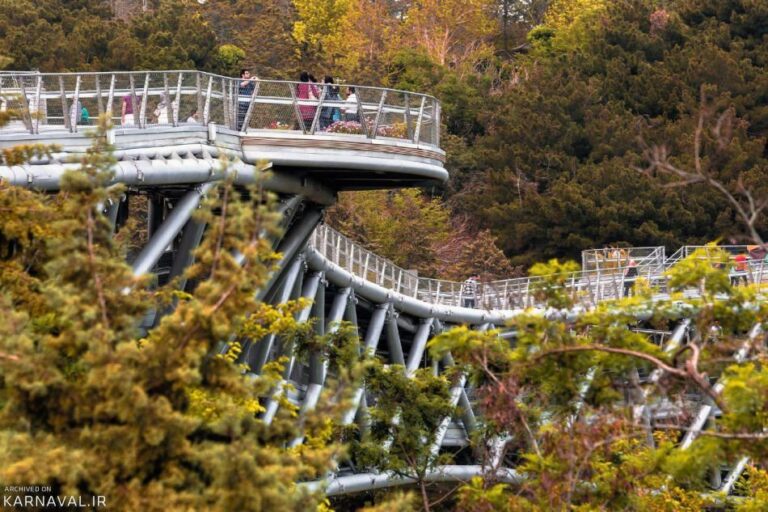
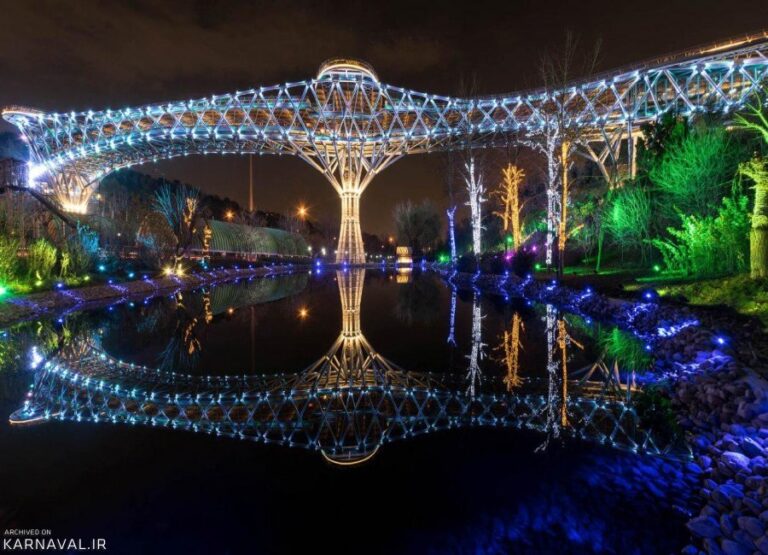
You can enter from the Taleghani Park side or from Ab-o-Atash Park. Entry to the bridge and both parks is free.

Tips for your visit
- Weekday evenings are calmer than Thursday and Friday nights, when the bridge gets very busy.
- Wear comfortable shoes: there is a fair amount of walking and some slopes between the parks and the bridge.
- Bring a layer in spring and autumn, as it gets breezy on the top deck after dark.
- Combine your visit with the nearby planetarium, the Gonbad-e Mina, in the Abbasabad area.